Key planning information for bone marrow transplant abroad.
$30,000 fromLowest listed price (India)
24 hospitalsList bone marrow transplant
13Countries with hospitals listed
Bone Marrow Transplant abroad is listed from US$30,000 to US$70,000 at 24 hospitals in India, with 13 countries listed in total. Each hospital quotes its own price for your case.
Prices last updated May 2010
Description of Bone Marrow Transplant:
What is Bone Marrow Transplant?
Bone Marrow Transplant is a treatment therapy for cancer or diseases related to the bone marrow.
During bone marrow transplant, the donor’s or the patient’s stem cells of the bone marrow are extracted, filtered and given back to the patient. In this process, the unhealthy bone marrow will be eliminated and healthy bone marrow cells will be transfused.
Although bone marrow transplant is not a standard treatment, it is used in the treatment of leukemia, aplastic anemia, lymphoma, immune deficiency disorders, and some tumor cancers.
What are the different kinds of bone marrow transplant?
The three kinds of bone marrow transplants are as follows:
Autologous bone marrow transplant:
The patient’s stem cells are removed before the patient receives chemotherapy and radiation. Once these treatments are performed, the stem cells are inserted back into the patient’s body. This transplant is known as a rescue transplant.
Allogeneic bone marrow transplant:
The stems cells are removed from a donor.
Umbilical cord blood transplant:
A newborn infant’s stem cells are removed from the umbilical cord right after birth. The stem cells are then stored and used until a transplant is needed.
How is bone marrow transplant performed?
A catheter is inserted into a vein in the patient’s chest, above the heart. Through the catheter, the patient is given drugs and other materials. Blood samples are also withdrawn through this catheter.
Once the patient is admitted to the bone marrow transplant unit, the conditioning or preparative regimen begins, in which the patient will have chemotherapy and radiation therapy for many days. This is required to eliminate unhealthy bone marrow and cancer cells. Space for new bone marrow is also created.
The patient will undergo a stem cell transplant through a process similar to blood transfusion.
A central venous catheter is used to deliver the stem cells into the patient’s bloodstream. The stem cells go into the bone marrow from the blood.
A bone marrow harvest is required to get bone marrow and stem cells from a donor. This may be done through a minor surgery in which the bone marrow is removed from the hip bones.
How to prepare for bone marrow transplant?
The patient is physically examined to determine if he or she is healthy enough to go through the bone marrow transplant procedure.
The patient’s age, disease, and stage of the disease are taken into account to determine if the patient should undergo the procedure.
A number of tests are conducted to examine the functions of the patient’s heart, lungs, kidneys and other vital organs. This is required to check if the functions of any of the organs are impaired after the transplant procedure.
About Bone Marrow Transplant
Key facts to plan your treatment: how long it takes, your hospital stay, anaesthesia, risks and recovery.
Days admitted
The patient may be admitted in the hospital through out the treatment of chemotherapy, the duration of which may vary from patient to patient.
Anesthesia
If the patient requires a bone marrow harvest surgery, general anesthesia is administered.
Recovery
- The patient will receive anti-infection medications. - Blood transfusions may also be required. - The patient will need to be fed through an intravenous tube until the mouth sores are cured. - Medication to stop graft versus host disease is also provided. - After the patient is discharged from the hospital, the patient needs to continue home recovery for two to four months. - The patient cannot return to full-time work and normal activities before six months. - For the first several weeks the patient will be too weak to do anything apart from sleeping, sitting and walking inside the house.
Risks
The risks of bone marrow transplant depend on many factors like the type of bone marrow transplant, disease, age and health of the patient, etc.
Some of the complications are as follows: - Bacterial, viral and fungal infections - Low platelets (thrombocytopenia) and low red blood cells (anemia) - Pain due to mouth sores and gastrointestinal irritation - side effects of chemotherapy and radiation treatment - Overload of fluids resulting in pneumonia, liver damage and high blood pressure - Respiratory distress due to infection, inflammation, bleeding etc. in the lungs - Organ damage caused by infection, chemotherapy and radiation, graft versus host disease and fluid overload - Graft failure caused by infection , insufficient stem cell count and recurrent disease - Graft versus host disease (GVHD) affecting the lungs, gastrointestinal tract, skin, lungs and liver
After care
- The patient’s white blood cell counts are very low so the patient will be very vulnerable to infection. - The patient should avoid going to public places during the recovery period. - The patient may need to wear protective masks. - The patient needs to visit the hospital several times a week for monitoring, blood transfusions and medications. - Most patients feel that the quality of life is improved after bone marrow transplant.
Cost of Bone Marrow Transplant by country
Price ranges in US$ for each country with a published range. Each hospital quotes its own price for your case.
Heidelberg University Hospital is one of Europe`s leading medical centers. World-renowned experts provide comprehensive care of the highest international standards in all medical specialties.
DoctorsADProf. Anthony D.HoWWProf. Wolfgang WickView all 4
The first in a brand new chain of ultra-modern hospitals, opened in January 2013, LIV hospital focuses on foreign patients, and tries to provide a complete and comprehensive service by a dedicated international team.
HM Hospitales is a hospital group with six private hospitals in Madrid: three general hospitals, a cardiovascular hospital, an oncological center and a women's health hospital.
Medipol Mega Hospital Complex is a modern medical facility with four specialist hospitals and an extensive selection of high caliber medical devices available for use. The hospital provides treatments in a wide variety of medical fields in its 470 bed facility.
DoctorsDMProf. Dr. Mehmet Faruk KöseDSProf. Dr. Seniye Sema AnakView all 14
Hospital Galenia holds the Certificate of Medical Attention Establishments granted by Joint Commission International (JCI), Accreditation Canada International (ACI) and is certified by the Mexican General Health Council (CSG).
A modern, JCI accredited, full service hospital, established in 2009. Acibadem Maslak is part of the Acibadem Healthcare Group, so international patients are taken care of through the group's International Patient Center.
DoctorsIAProf. Inci AyanABProf. Ali Bulent Antmen, M.D., PhDView all 6
This multi-specialty tertiary hospital offers various medical services as well as dental procedures to local and overseas patients. It serves over 100,000 international patients every year.
DoctorsPTDr. Piya TeawprasertNKDr. Napaporn KetvatanawesView all 9
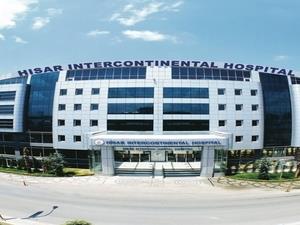
Hisar Intercontinental Hospital is a JCI accredited facility that provides the highest quality of care for all its patients. The hospital is one of Turkey’s largest private hospitals and utilizes the best and most up-to-date technologies in its 170 bed facility.
A tertiary university hospital with over 750 physicians, providing medical services in most medical specialties. Services to foreign patients include interpreters, insurance coordination, and transportation arrangements. Both hospital and doctors have liability insuranc

 University Hospital

 JCI

 Thai HA

 ISO