The Sirio-Libanes Hospital is a philanthropic institution whose mission is to be a Center of Medical Excellence, focusing on healthcare, teaching and research areas.
Hospital do Coração [Hospital for the Heart] is a non profit private hospital created to offer the most advanced technology in the world to needy children in terms of cardiologic procedures.
What is a CT scan?
A computed tomography (CT) scan is a procedure that uses computer processed tomography to view medical images. A CT scan can create detailed pictures of the brain, spine, chest and abdomen.
What is CT scan used for?
A CT scan can be used during biopsies to direct a surgeon to the correct area that is being examined.
It is also used to diagnose diseases and identify tumors and cancers.
Furthermore, a CT scan may also be used to aid the study of blood vessels.
How is a CT scan performed?
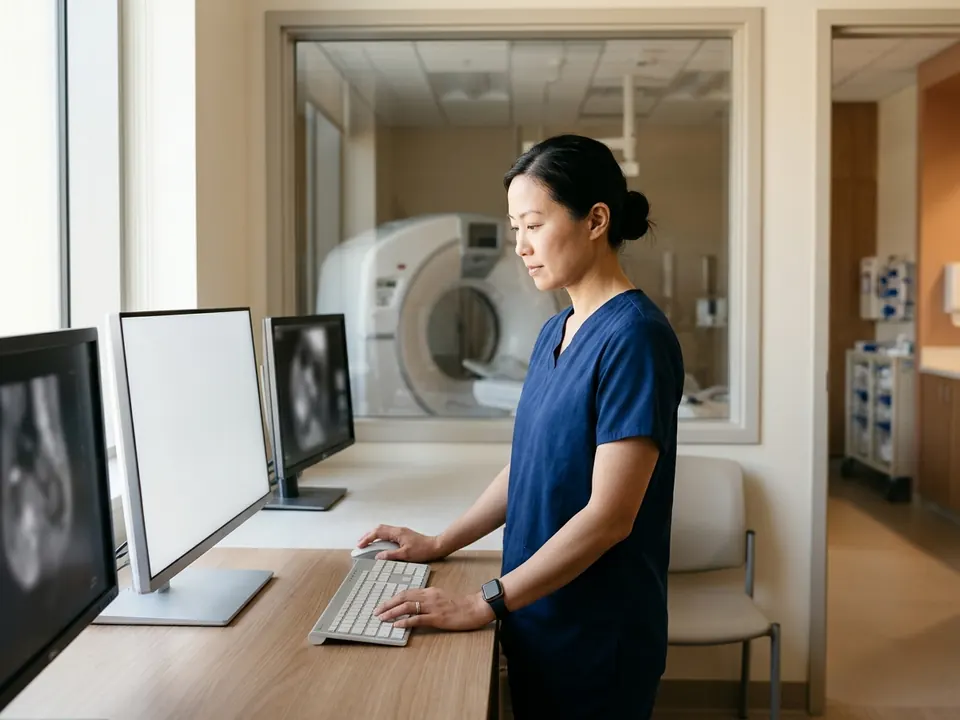
A CT scan is performed by a radiology technologist. The patient needs to lie down on a narrow table that goes into the middle of the CT scan machine. Depending on the part of the body that is being scanned, the patient is required to lie on the back, side or stomach. When the patient is inside the CT scan machine, x-ray beams circle the patient. The quantity of x-rays that are required to scan the body part is measured by small detectors within the scanner. Information from the scanner is taken by a computer that produces individual images called slices. These images are viewed on a monitor and they can be saved and printed. By placing the slices together, three-dimensional images of the organs are produced.
During a CT scan, the patient is required to remain still to generate clear images. If the patient moves during the procedure, it may result in the images being blurred. Additionally, the patient may be required to hold breath for short times.
How to prepare for a CT scan?
For some CT scans, a special dye known as contrast is inserted into the body before the procedure. This is done to highlight the particular areas in the body, which results in clear images. The contrasts are inserted into the body in various ways depending on the type of CT scan. It can be done through an IV inserted in the arm or with an enema through the rectum. Alternatively, the patient may be required to drink the contrast.
Some patients who are allergic to these intravenous dyes may be required to take medication.
The patient may be required to stop eating or drinking 4 to 6 hours before the CT scan if a contrast is being used.
If the patient weighs above 300 pounds, the patient should inform the doctor. CT scan machines usually have a weight limit, and the scanner operator may need to be contacted to make adjustments.
Patients need to remove metal jewelry before a CT scan.
The doctor should be informed about any medication that the patient may be taking.
The patient should also inform the doctor about certain medical conditions of the patient such as:
Pregnancy
Allergy to any medication
Heart problem
Diabetes
Kidney problem
Asthma
Multiple myeloma
About CT Scan
Key facts to plan your treatment: how long it takes, your hospital stay, anaesthesia, risks and recovery.
Duration of surgery/treatment
15 to 45 minutes, depending on the part of the body that is being scanned.
Days admitted
None. A CT scan is usually done as an outpatient procedure.
Anesthesia
Most patients do not require sedation. However, children may need to be given some sedatives to keep them still during the procedure.
Recovery
- If the patient has received the contrast though an IV, there may be some burning sensation. The patient may also experience a metallic taste in the mouth. These sensations are temporary. - If the examined body parts look normal then the results are considered normal.
Risks
A CT scan is a safe procedure. Some rare risks are: - Reaction to the contrasts that may cause nausea, vomiting, sneezing and itching. Chances of this are 1 in 100,000. - Leakage of the contrast outside the vein if contrast is provided in an intravenous method. - Life threatening allergy to the contrast known as anaphylaxis.
After care
If the patient experiences a delayed reaction to the contrast, the doctor should be informed immediately. The symptoms include: - Itching - Breathing difficulty - Difficulty in swallowing
 JCIPrice on request
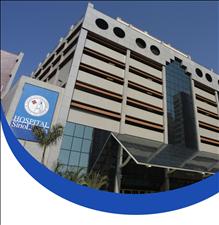 Non-profit Hospital
 Private Hospital
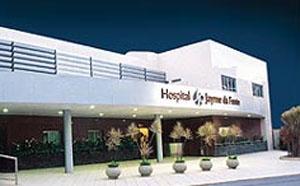 Private Hospital