Sant Joan de Déu-Barcelona Children’s Hospital is one of the leading medical centers in Europe for childhood and adolescence medicine and offers a comprehensive and multidisciplinary approach to health care from birth through 21 years of age.
What is Peritoneal Dialysis?
Peritoneal dialysis is a medical procedure to treat severe chronic kidney disease. The peritoneum inside the abdomen is used as a membrane through which fluids and other substances in the blood like urea, glucose, electrolytes, albumin, etc, are exchanged.
Peritoneal dialysis is an alternative treatment to hemodialysis. It is not a common form of dialysis. Although it can be performed at home, it has many risks and expenses. Peritoneal dialysis is not recommended if the patient has scarring in the peritoneal membrane or any other inflammatory bowel diseases.
How is Peritoneal Dialysis Performed?
A catheter is placed in the abdomen usually 10 to 14 days before the dialysis begins.
There are some peritoneal dialysis catheters that can be used immediately, however, it involves complications.
Peritoneal dialysis is known as exchange. An exchange involves the drainage of the dialysis fluid known as dialysate from the peritoneum and introduction of fresh dialysate into the peritoneum. Patients may require about four to six exchanges every day.
There are three steps involved in peritoneal dialysis:
Fill: The dialysate fills the peritoneal cavity inside the patient’s abdomen. The peritoneum is rich in minute blood vessels; therefore there is a constant supply of blood that can be filtered by osmosis and diffusion.
Dwell: When the fluid fills the peritoneal cavity, excess fluids and waste products in the blood pass through the peritoneal membrane and into the dialysate.
Drain: After some time, the dialysis fluid is drained out and new dialysis fluid replaces it.
The patient’s physical condition, diet and medications are monitored on a regular basis. If required, changes can be made in the treatment plan of the patient, and the number of exchanges, time between exchanges or the solution amounts may be altered.
What are the two main types of Peritoneal Dialysis?
The two main types of peritoneal dialysis are:
Continuous Ambulatory Peritoneal Dialysis (CAPD)
During this procedure, the dialysate solution is retained in the peritoneum for four to six hours. Then, the dialysate is drained out of the peritoneum and again a fresh dialysate solution is filled in. This method is most commonly used for peritoneal dialysis.
Continuous Cycling Peritoneal Dialysis (CCPD)
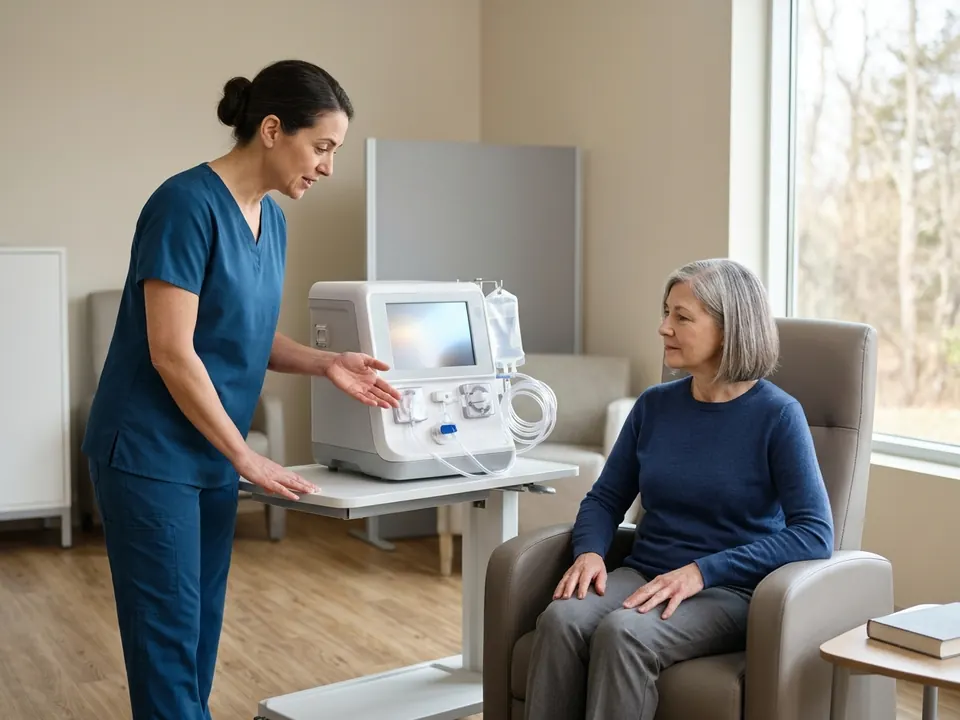
During this procedure, the dialysate solution is automatically filled and drained from the peritoneum with the help of a machine. The duration of this process is 10 to 12 hours, and it is mostly performed at night when the patient is asleep.
About Peritoneal Dialysis
Key facts to plan your treatment: how long it takes, your hospital stay, anaesthesia, risks and recovery.
Recovery
- The surgical dressing is changed once a week for 2 to 4 weeks unless there is drainage. - Dressing changes are done daily once the exit site of the catheter is healed. - The patient may experience bruising and discomfort after the access is placed for about one to two weeks.
Risks
- Infection around the catheter site - Peritonitis, i.e. infection in the lining of the abdominal wall - Severe pain in the rectum or perineum due to problems with the catheter - Mild back pain and bloating of the abdomen during the procedure - Encapsulating peritoneal sclerosis, caused by a thick layer of fibrin inside the peritoneum that obstructs bowels
After care
- The access should be cleaned and monitored daily. - Drainage, swelling or redness around the access site may indicate infection. - Scabs that occur at the exit site should never be picked or removed. - The catheter should be regularly checked for cracks as it may lead to infection. - The end of the catheter should be secured to the skin or dressing to avoid any tugging and tension. - The patient should not swim before the exit site is healed. - Using hot tubs should be avoided. - The patient should consult the doctor about using any cream or powder around the exit site, and taking showers. - The patient should report any pain or infection symptoms to the doctor.
 Children Hospital
 ISOPrice on request